

Is a wood stove more economical than gas? An in-depth comparison
Now the gas prices rise and sustainability is becoming increasingly important, many households are looking for alternative ways to heat their homes. A common question is: "Is a wood-burning stove more economical than gas?" In this article, we compare the cost, environmental impact and practical considerations of heating with a wood stove compared to heating with natural gas.
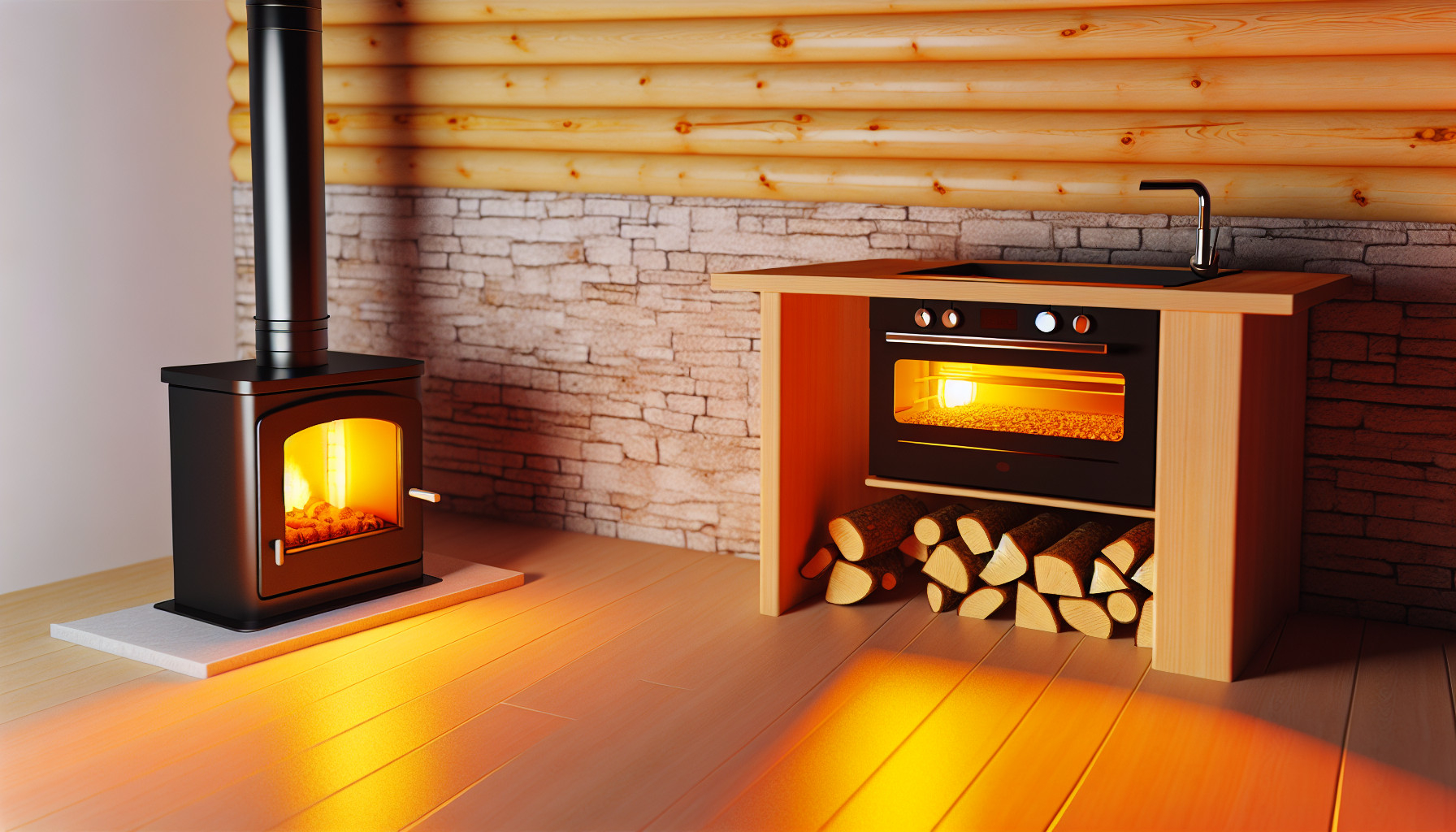
Cost comparison: wood-burning stove versus gas heating
Purchase cost and installation
The initial investment for a wood stove can range between €1,000 and €5,000, depending on the type of stove (e.g. a solid soapstone stove or a modern pellet stove). On top of that, there are installation costs that can run to €2,000, especially if a new flue must be constructed.
At a traditional natural gas boiler purchase costs are typically between €1,500 and €3,500 including installation. However, many homes already have a gas connection and central heating system, so these costs are often lower when replacing them.
Consumption cost per year
- Natural gas: On average, a household in the Netherlands consumes around 1,200 m³ of gas per year. At an average price of €1.20 per m³ (price level 2024), this amounts to about €1,440 per year.
- Wood: An average insulated house requires about 6-8 m³ of firewood annually. At an average price of €100 per m³, this amounts to €600 to €800 per year.
Conclusion: Based on consumption costs, heating with wood seems cheaper than with gas. But this depends a lot on the price of wood, the efficiency of the stove and how well insulated your home is.
Energy efficiency and performance
Modern wood stoves, especially pellet stoves, have an efficiency of up to 90%. Traditional open fires, by contrast, are very inefficient (around 10–20%). Gas central heating boilers generally have an efficiency of between 85% and 95%, depending on the type (high-efficiency or standard).
Pellet stoves, which are automatically fed with compressed wood pellets, offer the highest efficiency among wood-fired systems. They are also programmable and cleaner in combustion.
Sustainability and environmental impact
Carbon emissions and particulate matter
Natural gas is fossil and contributes to CO₂ emissions, but emits relatively little particulate matter when burned. Wood, on the other hand, is renewable if harvested sustainably, but causes more air pollution from particulate matter.
According to RIVM, wood smoke contributes significantly to air pollution in residential areas. This can cause health problems in people with respiratory diseases.
Sustainable heating
- Provide dry (<15% moisture) firewood to reduce smoke.
- Choose FSC- or PEFC-certified firewood.
- Install a modern, high-efficiency stove (Ecodesign label).
Sustainable heating is essential To reduce the environmental impact of wood burning.
Ease of use and comfort
Natural gas heating offers convenience: one press of a button and your home gets warm. The system is automatically controlled via thermostats and requires little maintenance.
Wood-burning stoves require more handling:
- Supply and storage of firewood or pellets.
- Regular cleaning of ash pan and chimney sweeping (at least once a year).
- Time investment for lighting and refilling.
However: Many people appreciate the cosy feel of real fire, which contributes to ambience in the home - something you don't get with gas radiators or underfloor heating.
Situations where a wood-burning stove is more economical than gas
- Outlying areas without gas connection: Here, a wood-burning or pellet stove can be more financially attractive than electric alternatives or expensive propane gas systems.
- Existing stock of free or cheap firewood: For example, if you can cut down trees yourself or use leftover wood.
- Temporary or supplementary heating: For example, in garden rooms or as additional heating in cold months.
Disadvantages of heating with wood compared to gas
- Air pollution: Particulate matter emissions are significantly higher with incomplete combustion or misfiring.
- Time investment: More work compared to automated gas boilers.
- Chimney maintenance: Required annually for safety (fire hazard from creosote).
- Less suitable for full house heating: Unless combined with other systems such as heat pumps or solar water heaters.
Cost savings versus comfort: which do you choose?
Choosing between gas heating or a wood-burning stove depends on your personal situation:
- Do you have space for firewood storage?
- Is your home already connected to the natural gas grid?
- Are you willing to invest time in maintenance?
- Does the idea of independence appeal to you?
Read more about sustainable heating options for your home here "
Sustainable alternatives: Heat pump or hybrid systems?
Both natural gas and wood are not fully sustainable. Do you really want future-proof heating? Then consider these alternatives:
- Heat pump systems: Electrically powered systems that extract heat from air or soil - ideal in combination with solar panels.
- Hybrid heat pump: Combines existing boiler with heat pump - lower investment than all-electric system.
- Solar water heater: For hot water without natural gas consumption.
Such systems are more expensive to buy but deliver significant savings as well as environmental gains in the long run.
Conclusion: Is a wood-burning stove cheaper than heating with gas?
Short answer: Yes, in many cases, heating with a modern wood-burning or cheaper pellet stove in terms of annual running costs, compared to heating with natural gas – especially if you can get hold of cheap firewood yourself or don’t have a gas connection.
However, when you consider convenience, health effects (particulate matter), maintenance and long-term sustainability, natural gas - despite its drawbacks - remains more comfortable for many households for the time being. For those who really want sustainable heating, heat pumps are ultimately the best choice.
Frequently asked questions on "Is a wood stove more economical than gas?"
What does heating with a wood stove cost per year?
<pAverage between €600 - €800 per year on firewood for a well-insulated house. This may be lower with your own supply of firewood.
Does burning wood cause more air pollution?
<pYes, especially incomplete combustion produces particulate matter that can be harmful to health. Modern stoves significantly reduce this effect if used properly.
Do I get a subsidy for a pellet or wood stove?
<pIn some municipalities, subsidies are available for sustainable heating systems such as pellet stoves. Check your municipality's website or www.rvo.nl/subsidies-regelingen/ISDE for this.
Does a pellet stove create fewer emissions than regular fire?
<pYes. Pellet stoves burn more efficiently and cleanly thanks to automatic dosing and controlled combustion technology.
Will natural gas disappear in the Netherlands?
<pThe government aims to phase out natural gas by 2050. New-build homes already get no gas connection since July 2018 (source: Rijksoverheid.nl)